9 April 2025/Terje Ennomäe
Change management powered by conversation data
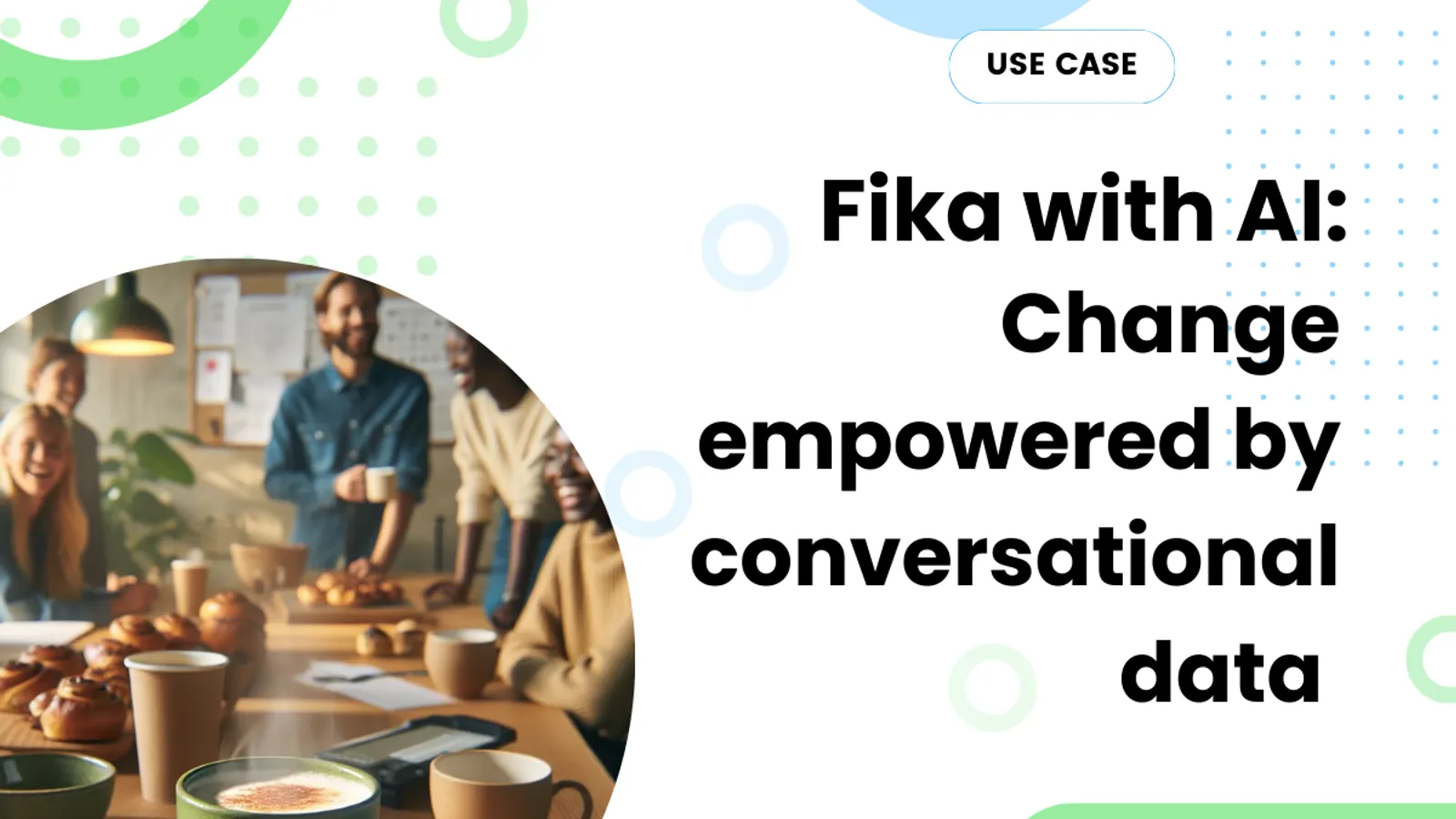
In large organisations, middle managers carry a lot at once. In customer service and product management alike, they make decisions that affect cost, revenue and quality every day. Yet many of those decisions are still made without data — or worse, on outdated or incomplete information.
That is the real change-management problem. It is rarely a single transformation project; it is the hundreds of small, everyday decisions that only work as well as the information behind them. And the information most likely to help is already being created — in every call, chat, email and piece of feedback.
The disconnect between insight and action
Here is the paradox we see in most enterprises. On one side, customers generate a vast amount of conversational data. On the other, managers still lean on manual notes, hand-built reports and gut feel to decide what to do.
Closing that gap is the point of conversation analytics. When conversations are automatically transcribed and classified, raw data becomes insight that can be searched and filtered. Managers can pick up churn signals early and spot concrete opportunities to improve services and processes — from the same interactions they were already having.
The catch is attribution. Because the change itself — a new script, a revised process, a coaching session — happens outside the analytics tool, the connection between insight and outcome is easy to lose. Recognising where a decision came from is part of embedding the habit.
Managing with data versus managing with guesswork
Picture two ways of working. In the first, a group of managers sit with laptops open, tense under a looming deadline, trying to make an important call with little time and less data. In the second, a single manager has already made today's decisions calmly — because a tool gave her the insight she needed without the scramble.
The difference is not effort or intelligence. It is whether the information was there when it mattered:
There are those who manage with guesswork, and those who manage with data.
The organisations that pull ahead are the ones that make that second way the default.
Where change actually starts
Real change is the sum of small, well-informed decisions. Conversation data feeds them across both customer and product management.
In customer management:
- Quality management — automatic quality scores across every call give a complete view of service quality, not just a random sample.
- Coaching and training — recurring issues surface automatically, so coaching targets what matters and uses real examples.
- Customer experience — tracking resolution rates by product, team or agent shows exactly what to fix to raise first call resolution.
In product and service:
- Cost saving — automatic summaries sent to the CRM cut after-call work and free up agent time.
- Digitalisation — conversation data reveals where customers struggle with self-service, so digital improvements are prioritised on evidence.
- AI direction — insight from real interactions helps aim future AI investment where it will pay off.
Why change is hard — and how to make it stick
Change usually fails on adoption, not technology. Even with a capable analytics platform, it takes deliberate effort to get managers to consistently use the data and act on the insight. The fact that the tool's impact is often invisible makes this harder — which is exactly why the story behind each improvement is worth telling.
The debate is no longer AI versus no AI; it is about who makes AI work best for them. Making insight visible, timely and tied to the decisions it informs is what turns a capable tool into an everyday management habit.
Use insight while it is fresh
Insight has a shelf life. To be useful, managers need real-time access so decisions can be made when they matter — not weeks later, once someone has compiled the numbers into a report.
The good news is that managers do not need to become data scientists. They need to see what matters and act on it. The action — improving a call script, changing a product flow, launching a new service — may happen outside the platform. But the spark that started it comes from the conversation data.
Feelingstream helps enterprises in banking, telecom, insurance, utilities and logistics turn everyday interactions into a competitive advantage — securely, and in a way that fits the existing workflow rather than forcing a new one.
Frequently asked questions
What does "change management powered by conversation data" mean?
It means grounding everyday management decisions — coaching, process changes, product priorities — in what customers actually say, rather than in gut feel or stale reports.
Do managers need data-science skills to use it?
No. The value is in seeing what matters and acting on it. Conversation analytics does the transcription, classification and filtering; managers make the calls.
Why do change initiatives fail even with good tools?
Usually because of adoption, not technology. Consistent use, real-time access and clearly connecting insight to outcomes are what make the change stick.
How does conversation data support faster decisions?
It turns live calls, chats and emails into searchable insight, so managers can act while the information is still fresh instead of waiting for a compiled report.
Where to go next
- See the bigger picture: Efficiency with AI
- Automate the admin: Automatic summaries
- Use it for process decisions: Process management with AI
- See it applied: Use cases
Ready to make your next decision an informed one? Book a demo and see your own conversations turned into insight.