2 October 2022/Terje Ennomäe
How to solve a business problem with conversation data
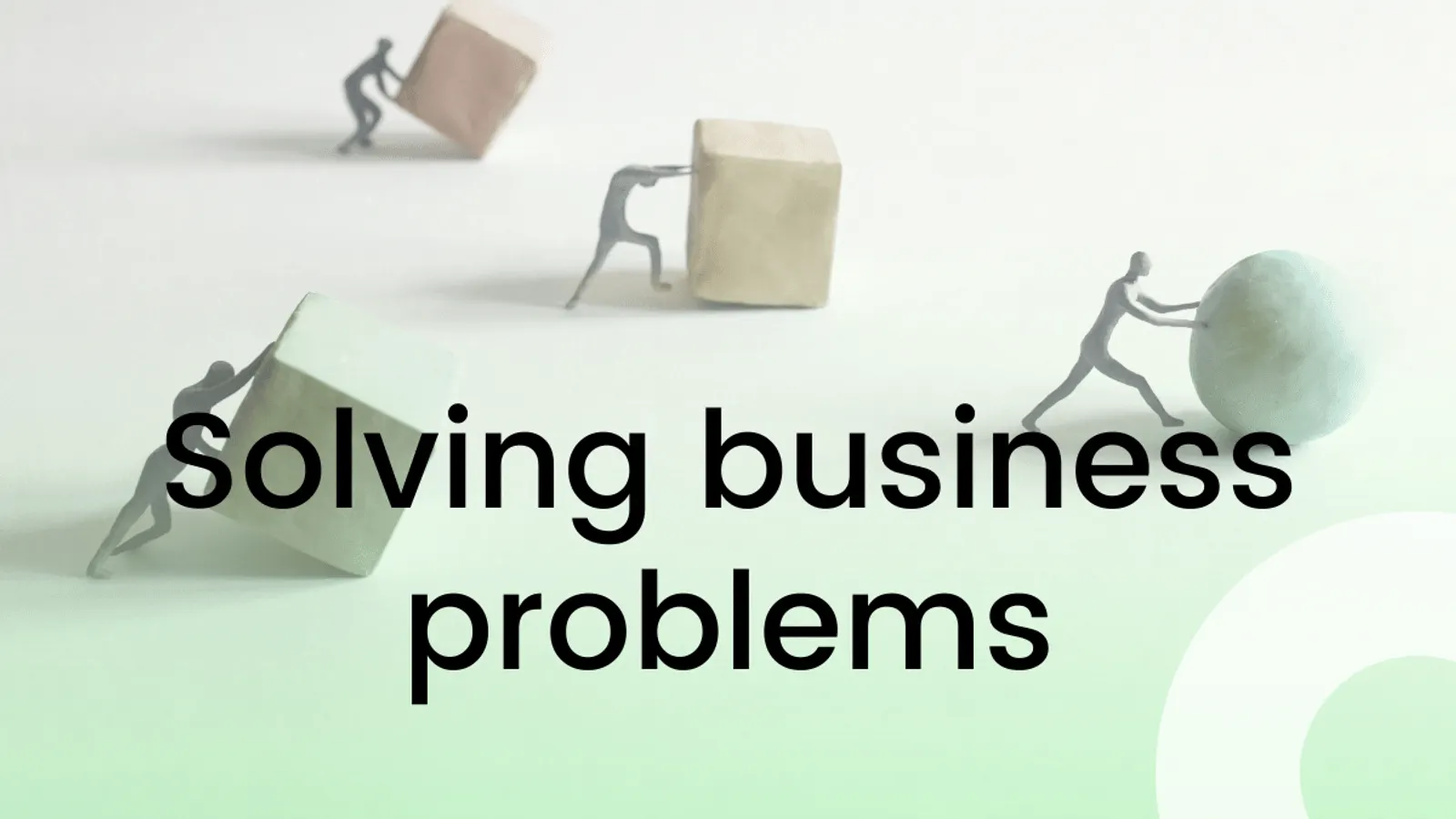
Every team faces the same recurring challenge: something is not working, and it is not obvious what to do about it. Identifying the real cause of a business problem — then solving it without creating new ones — is one of the most valued skills in any organisation, yet it rarely comes naturally.
The good news is that problem-solving is a skill, not a talent. Most techniques reduce to a handful of steps. Below are five that work, followed by how conversation analytics makes each of them easier by grounding decisions in evidence.
1. Define the problem
Attributed to Albert Einstein: "If I had an hour to solve a problem, I'd spend 55 minutes thinking about the problem and 5 minutes thinking about solutions."
Most problems go unresolved because nobody has truly pinned down what the problem is. Ask yourself plainly what it is — and if you are working with a team, never assume everyone defines it the same way. Agree on a single, clear statement of the problem before moving on. A shared focus is what produces results.
2. Identify the root cause
You cannot fix what you do not understand. Start gathering data about the issue: what is happening, where, when and how often? Those questions are enough to define simple problems. More complex ones need deeper investigation to separate symptoms from the underlying cause.
3. Define the solution
Once you understand the problem and its cause, write down your thinking so you can approach it with fresh eyes, then brainstorm options. At this stage there are no wrong answers — the aim is original ideas and a willingness to look at the situation from a different angle.
Beware the seven most expensive words in business: "this is how we've always done it." What got you into a situation is unlikely to get you out of it, so avoid anchoring on how the company has handled it before.
4. Decide to take action
Waiting for a problem to become unmanageable is costly, especially when a customer is involved. The longer it lingers, the more stressful and expensive it becomes. Build a clear action plan, secure the approvals you need, and put the solution into practice.
5. Track the success
The only way to know whether you have actually solved a problem is to measure the outcome. What result did you want, and what effect should the solution have on the business? Define the key metrics up front, and keep an eye on other metrics too, so the fix does not quietly create a new problem elsewhere.
How conversation analytics supports every step
Business decisions get much easier when you can back them with data. Customer interactions are a rich, honest source: they show how to improve products and services, where to focus marketing, and how to serve your existing customers better.
The hardest part of the five-step method is usually steps 2 and 5 — pinning down the root cause and measuring the result. This is exactly where conversation analytics helps. It lets you:
- Put a number on the issue — so you can tell a problem worth solving from a distraction.
- Find the root cause — by searching across every conversation, not a small manual sample.
- Measure the outcome — by re-running the same analysis after you act.
Compared with collecting and classifying data by hand, analysing conversations at scale makes it far easier to hit your goals.
Frequently asked questions
Why is defining the problem the hardest step?
Because it is tempting to jump straight to solutions. Time spent agreeing on a precise, shared definition of the problem saves far more time later and stops teams solving the wrong thing.
How does conversation analytics help find a root cause?
It turns calls, chats and emails into searchable text, so you can see how often an issue really comes up and read the conversations behind it — evidence rather than anecdote.
How do I know my solution worked?
Decide on your success metric before you act, then measure it again afterwards. Analysing the relevant conversations before and after a change shows whether the problem is actually shrinking.
Do small process fixes really matter?
Yes. Progress is usually a series of small, systematic improvements rather than one big leap. Each fixed process moves the business in the right direction.
Where to go next
- Pillar guide: What is conversation analytics?
- The platform: Product overview
- Related reading: The six steps of data analysis
- See it in practice: Explore use cases
If you want to base your next big decision on evidence rather than gut feel, Book a demo and we will show you how it works on your conversations.