15 May 2026/Terje Ennomäe
Real-time support for agents: five ways to help humans during the call
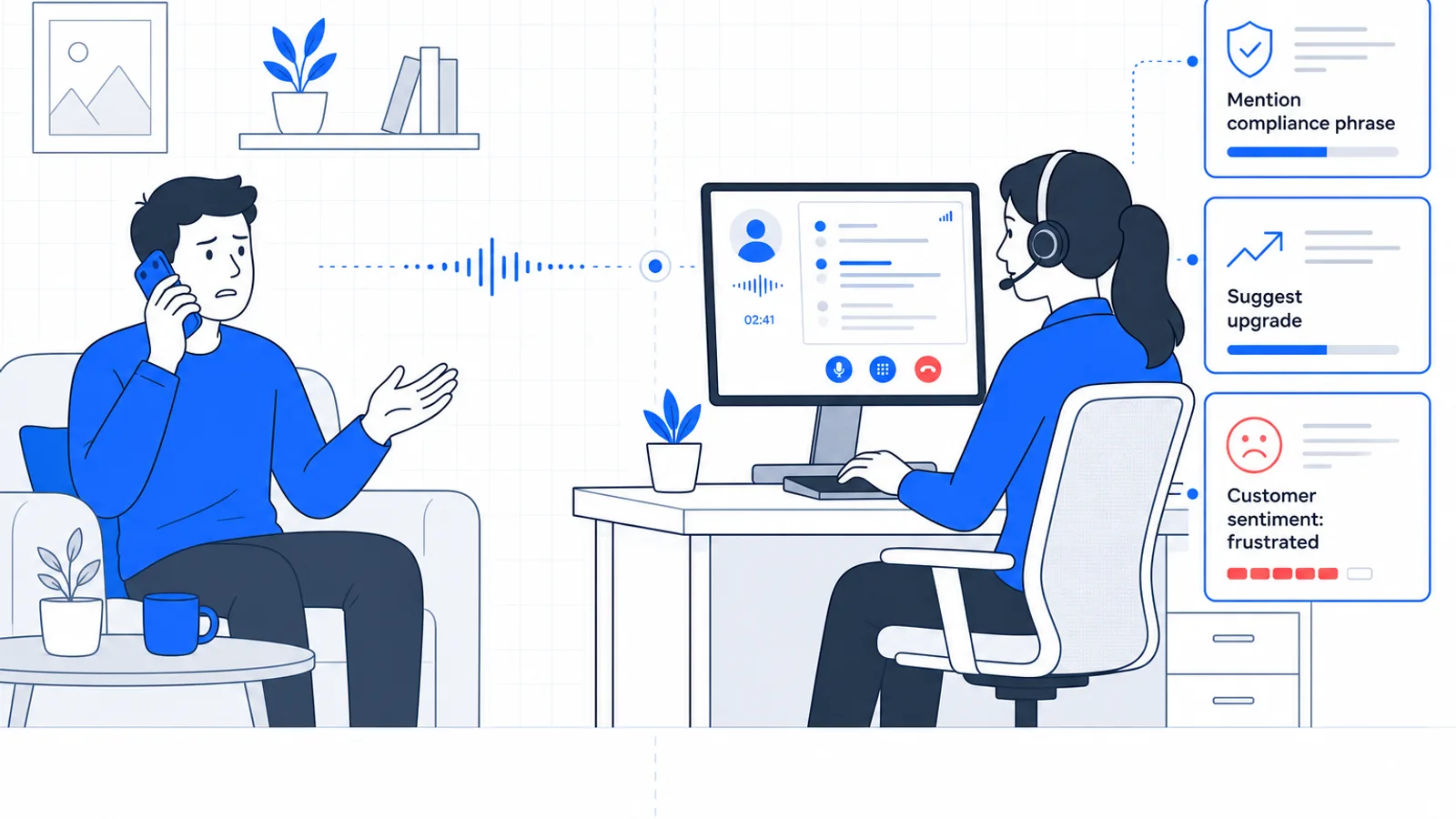
Most contact-centre support arrives too late. Quality reviews, coaching notes and scorecards all land after the call has ended — long after the moment where the agent actually needed help. By then the customer has hung up, the offer has been missed and the disclosure has been forgotten.
Real-time support flips that timing. Instead of telling an agent what they should have done, it helps them while the customer is still on the line. Using live transcription and agent assist, the system listens, understands the conversation as it happens and surfaces exactly what the human needs at exactly the right moment. Below are five practical ways to support agents during a call, followed by the three business benefits that make it worth doing.
Five ways to support agents during a call
1. Put live context on the agent's screen
The first form of support is simply removing the mental juggling. As the call is transcribed in real time, the agent sees a running record of what has been said, alongside the customer's history and the current topic. Nobody has to scribble notes or rely on memory to recall a policy number mentioned two minutes ago.
That live context means the agent can stay present in the conversation rather than hunting through tabs — and if the call is later handed to a colleague, the thread carries over cleanly.
2. Surface the right answer from your knowledge base
Agents lose time — and confidence — searching for information mid-call. A knowledge base agent that understands the live conversation can suggest the relevant article, price, or procedure before the agent even asks, drawing on your own approved content.
Because the suggestion is tied to what the customer just said, the agent gets an accurate, up-to-date answer instead of guessing or putting the customer on hold. Answers stay consistent across the whole team, no matter who picks up the phone.
3. Prompt for compliance and script steps
In regulated industries, a single missed disclosure can turn a good call into a breach. Real-time support checks the live transcript against your policy and campaign data, and prompts the agent the moment a required phrase, term or step has not been mentioned — while there is still time to say it.
These reminders are short and well-timed rather than intrusive. The agent stays in control of the conversation and decides how to act on each nudge, but the critical steps stop slipping through under pressure.
4. Offer next-best-action and upsell cues
When a customer shows interest in another service, or the conversation reaches a natural point for an offer, the system can suggest a relevant next best action — an upgrade, a cross-sell, or the right campaign talking points. This is where real-time support connects directly to sales monitoring: offers are made consistently and at the right moment, not left to chance.
The prompt gives less-experienced agents the same instincts as top performers, without a script that makes the call feel robotic.
5. Flag sentiment shifts and escalation risk
Not all support is about information — some is about reading the room. By tracking tone and sentiment as the call unfolds, real-time support can quietly alert an agent when frustration is rising, when a customer goes quiet, or when a call is drifting towards escalation.
That early signal gives the agent a chance to change approach, slow down, or bring in a supervisor before the situation deteriorates — protecting both the outcome and the relationship.
Three business benefits of real-time support
Real-time support is not just a nicer experience for agents. It changes three things that leaders care about.
1. Faster resolution and lower handling time
When answers, context and next steps appear during the call, agents spend less time searching, transferring and putting customers on hold. That shortens average handling time and lifts first-contact resolution — the same volume of calls resolved with less effort, which is a direct efficiency gain.
2. Consistent quality and compliance on every call
Because prompts arrive in the moment, disclosures get made, scripts get followed and answers stay accurate across the whole team. Quality stops depending on which agent happens to take the call, and compliance is enforced as the conversation happens rather than caught afterwards — reducing risk and rework.
3. More confident agents who stay longer
New hires perform closer to experienced colleagues from day one when help is always at hand, and experienced agents feel less stress knowing the safety net is there. That confidence shortens onboarding, improves the daily experience and, over time, helps retain the people you have invested in training.
A loop, not just a prompt
The value grows when in-the-moment guidance feeds back into analysis. Prompts, outcomes and sentiment flow into your reporting, so training teams can refine scripts, campaign managers can adjust messaging and quality teams can focus on what actually moves results. Guidance during the call and insight after it form a single improvement loop.
These tools give teams clarity on quality and process. They support coaching and development — they are not used for individual performance reviews or employment decisions.
Frequently asked questions
What is real-time support for agents?
It is help delivered to the agent during a live call — on-screen context, knowledge suggestions, compliance prompts, next-best-action cues and sentiment alerts — rather than feedback given afterwards in a review.
Does real-time support interrupt the conversation?
No. It provides short, well-timed nudges on screen. The agent stays in control of the call and chooses how to act on each prompt.
Is real-time support only for sales calls?
No. It supports both service and sales teams. Service calls benefit from context, knowledge and compliance help; sales calls also gain next-best-action and offer timing. For the sales angle, see how real-time guidance supports contact centre sales.
How quickly do teams see results?
Because support lands during the call, effects on handling time, compliance and agent confidence tend to appear quickly — and compound as prompts and outcomes feed back into coaching and analytics.
Where to go next
- The product: Agent assist
- Knowledge at hand: Knowledge base agent
- The sales angle: Real-time guidance for contact centre sales
- Related reading: Real-time support with Agent Assist
Want to see real-time support on your own calls? Book a demo and we will show you how it helps agents during the call.