When planned campaigns meet live conversations
Most companies know which campaigns they plan to run, which customers they want to reach, and which offers should be presented. Many run these campaigns through email or social channels, and those are not the focus here. In contact centres, campaigns are different. But without real-time agent guidance for sales, even the best campaign plans can fail during live conversations. These calls are more personalised and higher-value. They include sales, upsell, cross-sell, and retention, where the agent adapts arguments and responds directly to the customer in real time. Yet what is written on paper often looks very different from what is actually said during calls.
A large share of lost revenue does not come from weak campaigns or poor customer interest. It comes from something far simpler. The offer never reaches the customer during the call, or it reaches them at the wrong angle or too late.
In many organisations, the campaign flow looks clear on paper. Business teams define the next best offer. Marketing and product teams shape the arguments and messaging. The contact centre then passes this information to human agents through training, guidelines, or internal documentation. Once calls begin, agents must apply this guidance in live, fast-moving conversations.
This is where gaps tend to appear. During the call, the agent must balance customer questions, objections, and mandatory steps. In the middle of this, the right moment to present the offer is easy to miss. By the time the agent can return to the planned message, the opening has already passed.
Why teams need real-time sales support, not just post-call reviews
Across a team, these lost moments add up. A strong campaign can underperform for reasons that remain hidden unless someone listens back to the calls. Growing contact centres often don’t have the time or resources to review calls in detail. Even when someone does it, the findings arrive too late to help the current campaign.
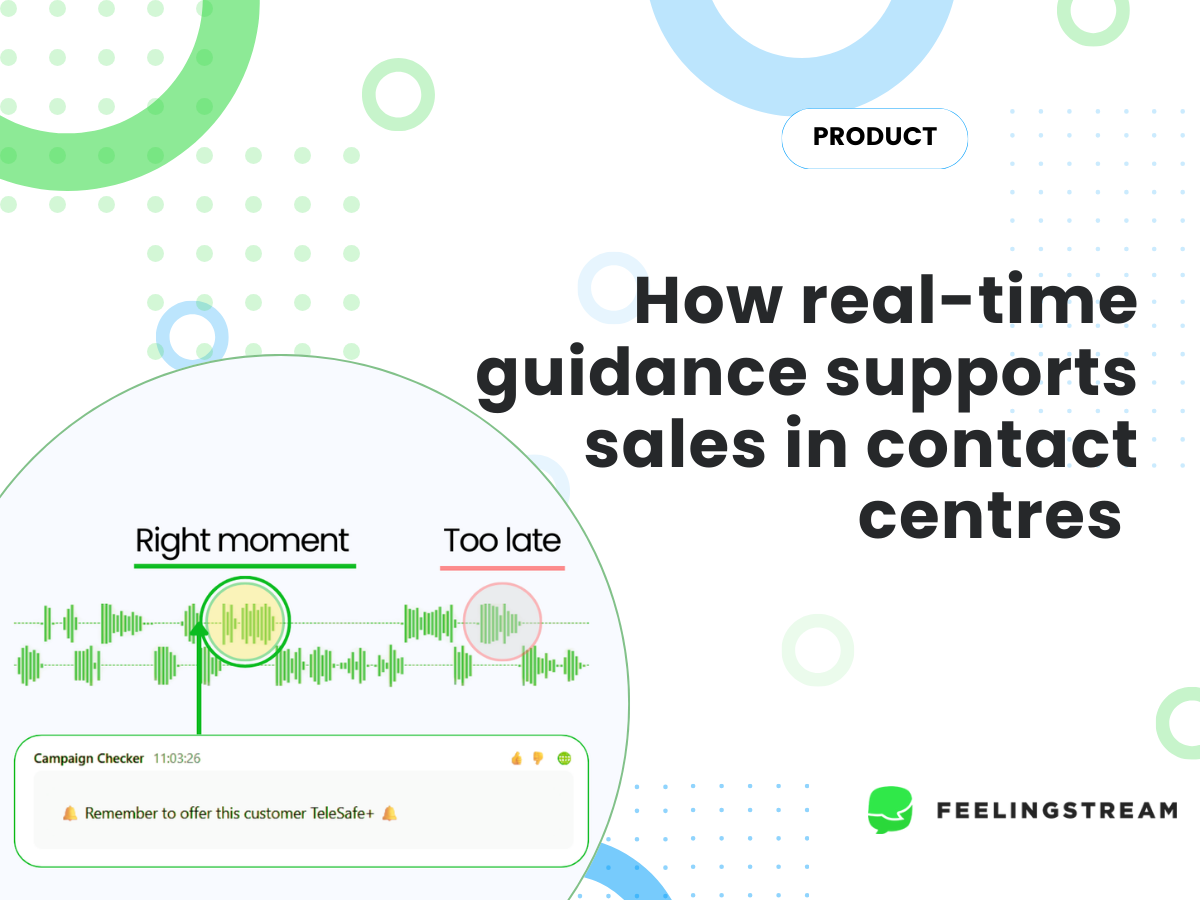
This is where real-time agent guidance for sales performance makes a difference. Instead of checking calls afterwards, agents receive small, well-timed reminders during the conversation. These nudges do more than remind the agent of the offer. They can also suggest simple ways to steer the conversation towards the relevant topic, for example through a short leading question or a natural transition. This helps agents bring up the offer at the right moment and follow the intended flow without breaking the call or adding pressure.
What real-time guidance for sales really changes
The result is a steadier level of campaign delivery. Agents mention the offer more often and with more confidence. Because agents guide the conversation naturally towards the topic, offers feel better timed and less forced. Missed opportunities become less common, and the difference between the strongest and weakest performers begins to narrow.
New agents benefit even more. They learn the rhythm of the call faster, understand where the offer fits naturally, and reach a stable level of performance earlier in their onboarding. Early mistakes become less frequent, which reduces the cost of ramp-up across the team.
Managers gain a clearer view of how campaigns play out in real conversations. Instead of guessing whether an offer was mentioned, they can see patterns of timing and delivery. This helps them support teams in a more focused and timely way.
For organisations that rely on upsell, cross-sell and retention, these improvements are meaningful. The team does not need longer calls. They need the right guidance at the right moment.
How Agent Assist changes call outcomes
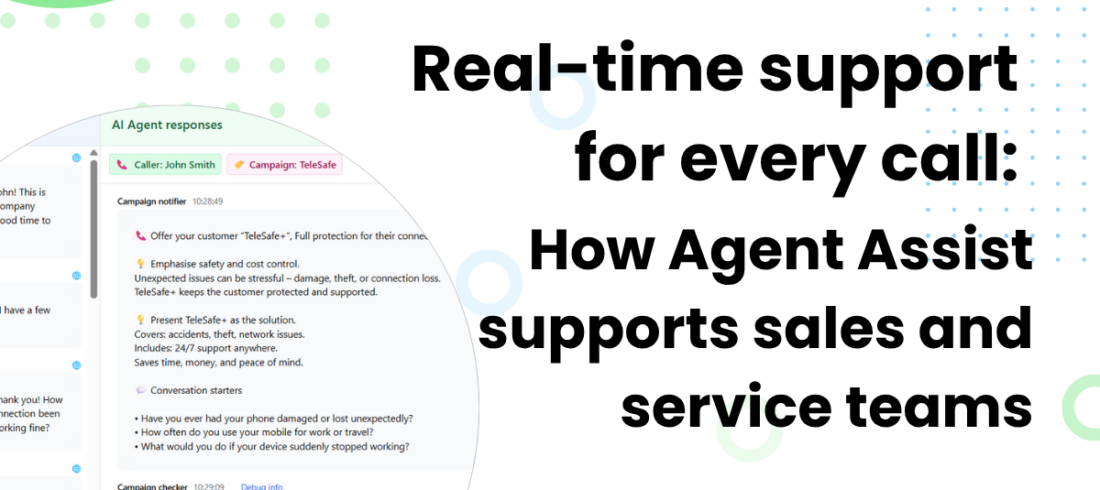
Agent Assist is designed to provide exactly this kind of support. It listens to live calls, understands when an offer is relevant, and gives an on-screen reminder that helps the agent act at the right moment. The call remains natural. The agent stays in control. And the customer receives the offer as intended.
When agents mention offers at the right time and in the right way, customer conversations become more relevant, more persuasive, and more productive. Over time, this builds confidence in the team, improves consistency across calls, and increases the return on effort spent planning campaigns.
For organisations where retention and upsell matter, this makes a clear difference not only in revenue, but also in how smoothly teams perform during every call.
Ready to improve timing in your team’s sales calls? Contact us for a demo.
Curious to see what else we’re working on? Stay connected on Feelingstream’s LinkedIn page.